Run seasonal campaigns when your packaging can't change

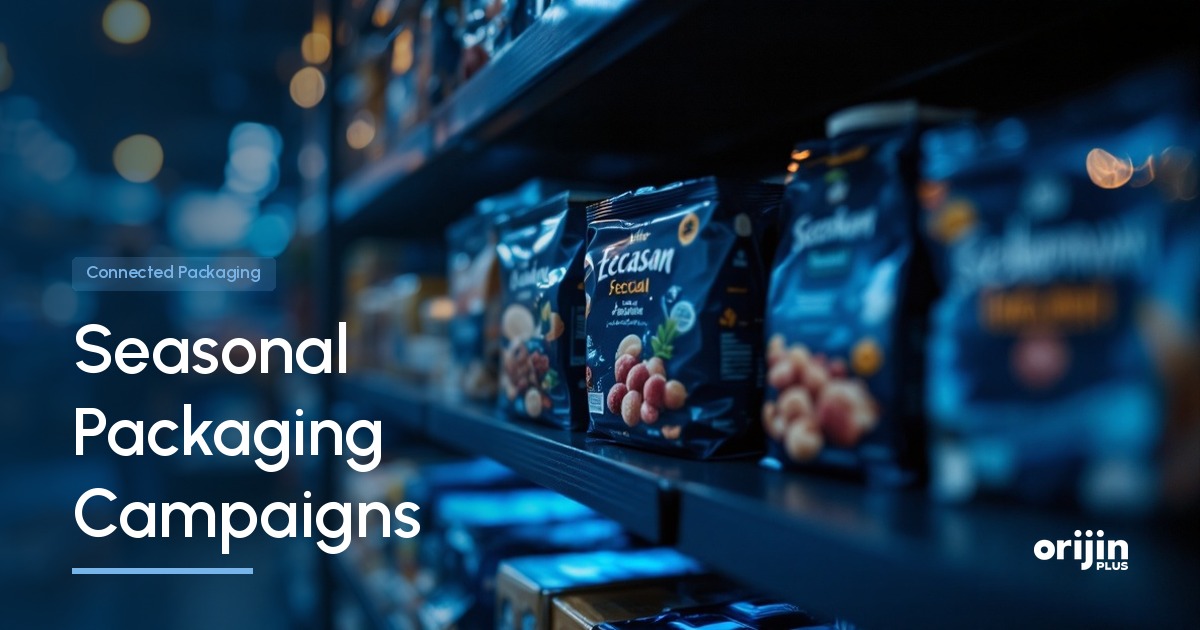
A summer recipe push, a Christmas competition, a back-to-school giveaway. Marketing wants four campaigns a year. Packaging gives you one print run, locked months in advance. The artwork on shelf today was signed off long before anyone wrote the campaign brief. This article shows how a dynamic QR code lets the destination behind a fixed printed code change every season, so the campaign moves while the packaging stays exactly where it is.
Why can't seasonal campaigns run on printed packaging?
Printed packaging is fixed the moment it goes to press. Food and beverage runs are ordered three to six months ahead, so the pack on shelf in December was approved in summer. Anything printed on it, including a static campaign URL, is frozen for the life of that run. A new campaign means a new print run, or no campaign at all.
Most brands accept that trade-off and run nothing. The few who try it pay twice: once for the design work, once for the reprint, and again in the weeks of lead time while old stock sells through. By the time the new pack reaches shelf, the season has often passed. The cost is not just money. It is the missed window.
What is a dynamic QR code and how does it fix this?
A dynamic QR code prints one fixed pattern on the pack but points to a managed web address you control. The printed code never changes. The destination behind it does. You edit where the scan lands from a dashboard, so a single code can serve a summer recipe in January and a festive competition in December without touching the artwork.
This is now the default. Around 79 percent of businesses choose dynamic codes over static ones, and 69 percent of marketers update where their codes point at least monthly. The pattern on the pack becomes a permanent doorway. What sits behind the door is yours to change as often as the calendar demands. One print run, many campaigns.
Connected packaging treats the code as live infrastructure, not a static link.
How do you swap the campaign behind a fixed code?
You point the same code at different content using a managed resolver. The resolver is the layer that decides what a scan returns. You set rules by date, season, or campaign, and the resolver routes each scan to the right experience. Changing a campaign is an edit in the dashboard, not a job for the printer.
Rhys puts the engagement case plainly. His position is that a code doing one fixed thing forever is doing half a job. The in-store shopper holding the product has five seconds and one question to answer. The at-home scanner who already bought wants a reason to come back. A static destination serves one of those moments and fails the other. A dynamic destination lets the same code carry a trial offer in spring and a loyalty reward in autumn, matched to whoever is scanning and when.
Most brands point a code at one webpage and leave it. That treats the most flexible asset on the pack as if it were ink. Reframing it as something you digitise and manage over the product's life is where the value sits.
Does swapping the destination affect retail or GS1 compliance?
No. A GS1 Digital Link QR code carries the product identifier in its address structure, and checkout reads that identifier directly without ever loading the web page. Point-of-sale works offline. Changing the campaign behind the code changes only the web layer, which sits entirely separate from the scan a till performs.
This matters as retailers move toward GS1 Sunrise 2027, the industry deadline for accepting 2D barcodes at point of sale by the end of 2027. The same printed code satisfies the checkout requirement and carries your seasonal campaign. You are not choosing between a compliant barcode and a marketing one. It is one code doing both jobs, and the campaign side stays editable for the life of the pack. The same principle covers QR codes on food packaging used for ingredient and allergen information.
What kind of results do seasonal scans actually drive?
Well-run packaging campaigns earn real engagement. Food and beverage packs average a scan-to-reach rate near 15 percent, and the best-designed campaigns reach 25 to 30 percent. The deciding factor is whether the scan leads somewhere worth the effort, which is exactly what a swappable seasonal destination lets you control.
Naked Life tested this directly when entering Singapore. Across a controlled tasting campaign, telling shoppers about an instant win lifted taste-to-purchase conversion from 12 percent to 45 percent, close to a four-fold improvement, on a 15 percent campaign scan rate. The mechanic behind the code did the work. Swap that mechanic each season and the same printed pack keeps earning.
If you are planning campaigns against packaging you cannot reprint, set up dynamic QR codes at orijinplus.global and start swapping the destination by season.
Frequently Asked Questions
Do I need to reprint packaging to run a new seasonal campaign?
No. A dynamic QR code prints once and points to a destination you edit from a dashboard. You change where the scan lands without ordering new packaging, so a summer campaign and a festive campaign run from the same printed code across the same print run.
What is the difference between a static and a dynamic QR code?
A static QR code encodes a fixed destination that can never change after printing. A dynamic QR code encodes a managed address, so you can change the destination at any time without reprinting. Around 79 percent of businesses now use dynamic codes for that flexibility.
Will changing the destination break the barcode at checkout?
No. A GS1 Digital Link QR code holds the product identifier in its address structure, and point-of-sale reads that identifier directly without loading the web page. Checkout works offline. Editing the campaign behind the code changes only the web content, never the checkout scan.
How quickly can I switch a campaign?
A switch is a dashboard edit, not a print job. You set the new destination, save, and the next scan returns the new experience. There is no print lead time and no stock sell-through to wait out, so campaigns can change as often as the calendar requires.
Can one code show different content in different markets?
Yes. A managed resolver can route scans by market, season, or campaign. The same printed code can serve a compliant ingredient panel in one region and a brand-led seasonal offer in another, all decided by rules you control rather than by what was printed.
Does a seasonal campaign need new artwork each time?
No. The artwork and the printed code stay fixed for the life of the print run. Only the destination behind the code changes. That separates the slow, costly print cycle from the fast, free campaign cycle, so marketing can move at the speed of the season.
How many scans should a seasonal campaign expect?
Food and beverage packs average a scan-to-reach rate near 15 percent, with well-designed campaigns reaching 25 to 30 percent. The mechanic behind the code drives the number. A clear reason to scan, like an instant win or a recipe, lifts engagement well above the baseline.